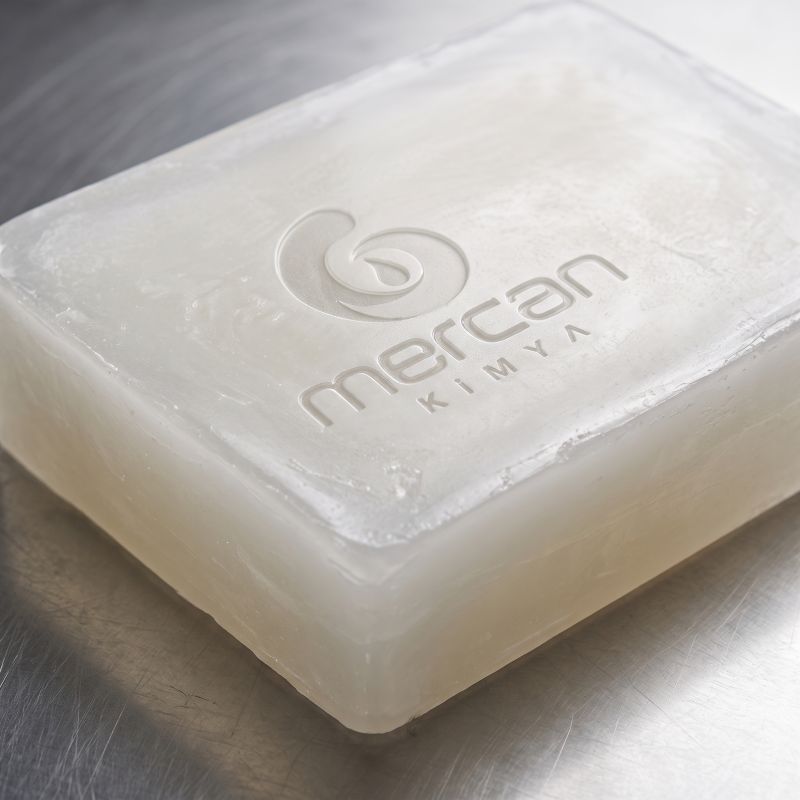
What is Paraffin?
Paraffin is a versatile raw material derived from petroleum, generally existing as a solid, waxy substance at room temperature. It is widely used across numerous industries including candles, wood, paper, textiles, cosmetics, and construction.
Chemically, it is a mixture of saturated hydrocarbons (alkanes) with varying carbon chain lengths, typically composed of carbon chains above C20.
Thanks to its water-repellent properties, chemical stability, and controlled melting behavior, it is frequently preferred throughout industrial sectors. As Mercan Kimya, we deliver MERWAX paraffin solutions with customizable oil content, congealing point, and crystalline structure tailored to your specific application.
Key Properties of Paraffin
White or translucent in color,
Solid and waxy in texture,
Hydrophobic (water-repellent),
Melts readily when heated.
How is Paraffin Produced?
The primary raw material in paraffin production is Slack Wax, obtained during petroleum refining and lube base oil production.
Crude Oil → Refinery → Base Oil → Dewaxing → Slack Wax → Purification & Deoiling → Commercial Paraffin
At Mercan Kimya facilities, Slack Wax is purified and refined according to target applications and customer requirements, optimizing oil content, congealing point, and color specifications.
What are the Types of Paraffin?
Based on application and degree of refinement, the principal types of paraffin include:
- Fully Refined Paraffin: A high-purity, white wax grade with low oil content.
- Semi Refined Paraffin: A cost-effective grade utilized across diverse industrial processes.
- Microcrystalline Wax: A more flexible, fine-crystalline structure featuring branched hydrocarbons.
- Liquid Paraffin: A highly refined blend of mineral oils existing in liquid state at room temperature.
- Paraffin Emulsion: Stable anionic, non-ionic, or cationic dispersions formulated for water-based systems.
Mercan Kimya MERWAX Paraffin Products
Select prominent product specifications from our MERWAX line addressing varied technical criteria:
| Product | Oil Content (%) | Congealing Point (°C) | Penetration |
|---|---|---|---|
| MERWAX MRB | 0.8–1.5 | 55–58 | 10–20 |
| MERWAX A1 | 0.8–1.5 | 56–59 | 10–20 |
| MERWAX M1 | 0.8–1.5 | 57–62 | 10–25 |
| MERWAX RH13 | 1.0–3.0 | 60–65 | 15–40 |
| MERWAX BR | 3.0–7.0 | 70–74 | 30–60 |
Where is Paraffin Used?
The hydrophobic and functional nature of paraffin serves an extensive spectrum of applications:
- Candle and match manufacturing,
- Wood products (waterproofing for MDF, particle board, and chipboard),
- Paper and packaging coatings,
- Textiles (yarn lubrication and finishing agents),
- Construction and concrete additives / mold release agents,
- Investment casting wax patterns,
- Cosmetics, physical therapy, and pathology laboratories.
Frequently Asked Questions
At what temperature does paraffin melt?
Standard paraffin waxes typically melt between 47°C and 65°C, while commercial MERWAX grades span congealing points from 52°C up to 74°C.
Is paraffin soluble in water?
No. Due to its non-polar molecular structure, paraffin is hydrophobic and completely insoluble in water, rendering it an exceptional water-repellent agent.
How to choose the right paraffin?
When selecting a paraffin grade, the target industry, oil content, congealing/drop melting point, and processing temperatures must be carefully considered.
As Mercan Kimya, we have been operating since 1977 as Turkey's first and only R&D-backed paraffin manufacturer. In addition to standard product lines, we engineer tailor-made paraffin designs optimized for your specific industrial processes.
Contact our technical team for tailored solutions and sample requests.
📩 Contact: