Grafting in viticulture is as much the beginning of a new life as it is a delicate biological engineering process. The true success in agriculture and sapling production depends not only on the correct grafting technique, but also on how well the plant tissue is isolated from the outside world post-operation.
Grafting Wax, standing out as the most strategic assistant of modern viticulture, steps in at this point to take the plant under protection.
In modern industrial systems, this isolation goes beyond static coatings, being managed with microcrystalline structures that have superior adhesion and elasticity properties, perfectly compatible with the plant's biological cycle.
Formulated specifically for the grafting of grapevine saplings and pre-planting preparation processes, this special product—unlike classical paraffins—does not harm plant tissue and exhibits dynamic elasticity according to varying outdoor temperatures, maximizing the success rate of the graft.
Callus Process and Moisture Stabilization
The most critical period for grafted cuttings is the high-humidity and warm callus rooms where tissue fusion, namely callus formation, takes place.
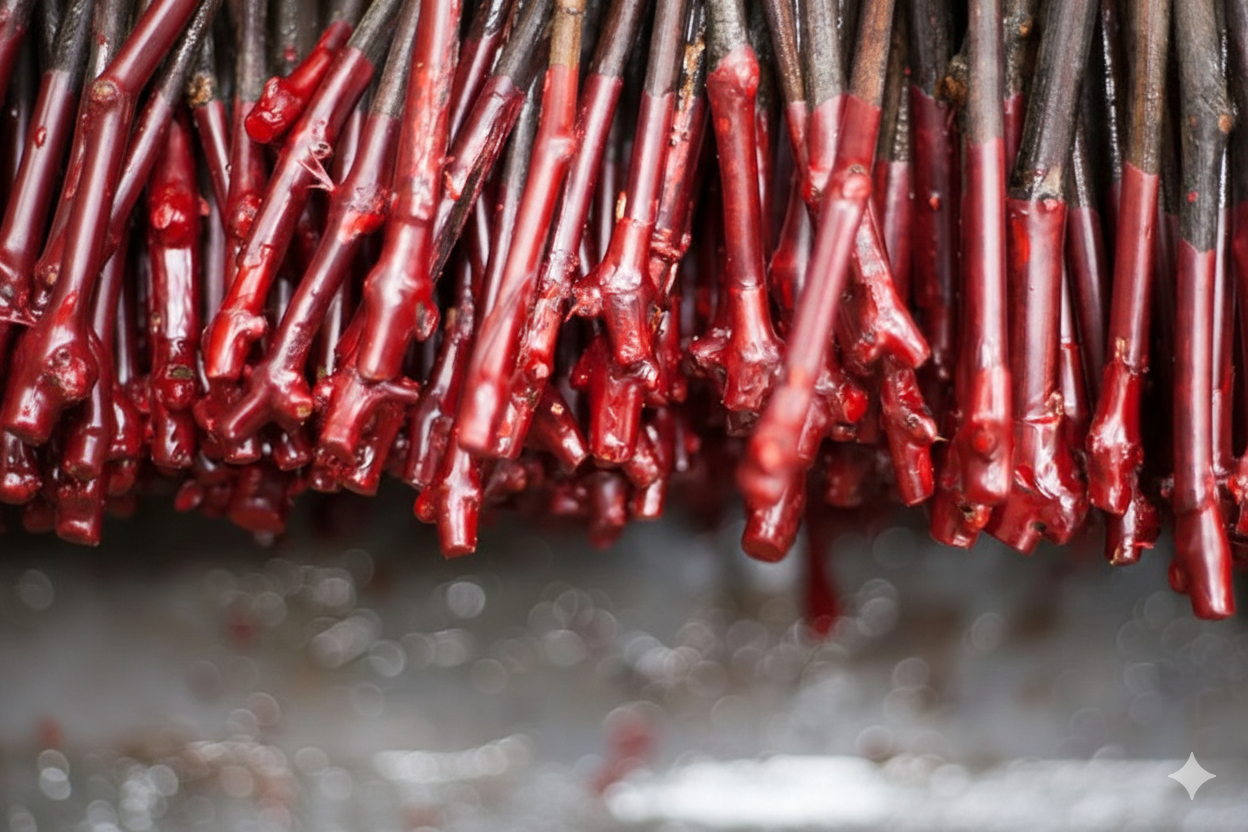
Applied via the dipping method, the wax coats the upper part of the sapling and the graft area at a microscopic level, preventing the evaporation of internal water.
Professional grafting waxes act as an active barrier against fungal diseases that may develop in the humid environment of callus rooms, thanks to their specific components.
Meeting the Soil and Resistance to Environmental Conditions
From the moment saplings leave the callus room and are planted in the field or soil, they face direct climate pressure.
The wax insulates the sensitive parts remaining above ground like a "thermos" against the scorching UV rays of the sun and the drying effect of the wind.
High-purity paraffins do not run or melt even under extreme field temperatures due to their ideal melting points of around 70°C. This stability prevents leakage into plant tissue and burning of cells.
Bud-Friendly "Thin Membrane" Mechanism
The most important feature of modern grafting waxes is their flexible structure that does not hinder plant development.
The wax forms a film layer of optimum thickness through which newly awakening shoots, namely buds, can easily tear and emerge.
Having completed its task, the wax layer cracks and sheds automatically as the plant diameter expands and it is exposed to UV light. This eliminates the need for additional cleaning labor in nurseries.
Industrial Efficiency and Quality Standards
In industrial-scale production, the dipping technique maximizes operational speed and sealing quality. With their low oil content and stable chemical structure, these products are not just coating materials; they are a production engineering tool that guarantees the healthy development of the sapling from rooting to its first shoot in the field.
Grafting wax is a strategic coating product that helps isolate plant tissue against environmental conditions, especially during the grafting of grapevine saplings and pre-planting preparation processes.
As Mercan Kimya, with over a quarter-century of experience and an R&D-focused production approach, we continue to offer high-purity grafting waxes and special formulations that elevate sapling production quality to international standards.
The gardens of the future are established with healthy saplings protected by the right raw material.
📩 For your technical information, product, and sample requests: